 DegreePlus Daily The skills that make your degree pay off
Allied Health Careers – The Healthcare Paths Most People Never Consider
Where a two-year qualification can lead to six-figure earnings, and the honest trade-offs that come with it
When people think about a career in healthcare, the conversation almost always narrows to two options. Become a doctor, which means a decade of training and enormous cost. Or become a nurse, which is a shorter path but still a substantial commitment with its own well-documented pressures. What gets left out of that conversation is an entire category of healthcare work that employs millions of people, pays well, and in several cases requires far less education time than either of those two paths.
Allied health is the term for the healthcare professions that sit outside medicine, nursing, and dentistry. It covers radiologic technologists, sonographers, respiratory therapists, physical therapists, occupational therapists, medical laboratory scientists, surgical technologists, and dozens of other roles that keep hospitals and clinics functioning. These are not support roles in any diminished sense. They are skilled clinical professions with their own credentials, their own scope of practice, and in many cases their own significant patient responsibility.
This article looks honestly at allied health as a career category. It is written for people considering healthcare who have not seriously examined these paths, for allied health students wondering how their chosen field compares to others, and for working allied health professionals thinking about specialisation or a lateral move. It covers what the fields actually pay, how long the education takes, which paths have the strongest growth, and the honest trade-offs that the enthusiastic career content tends to skip.
The finding that makes allied health worth examining
The most useful thing to understand about allied health, and the thing that most changes how you should evaluate it against other healthcare paths, is the relationship between education investment and earnings.
In most professional fields, earnings track education fairly predictably. More years of study, higher qualification, higher pay. Allied health partially breaks this pattern in a way that creates genuine opportunity. Several of the highest-paying roles in the category are accessible through a two-year associate degree combined with certification, and they pay at or near six figures.
The specific figures are worth stating clearly, drawn from the most recent federal wage data. Radiation therapy is the highest-paying allied health field, with a median of around $105,310. Nuclear medicine technology follows at $101,370. Diagnostic medical sonography sits at $96,590, with projected growth of 13 percent between 2024 and 2034, among the fastest in the category. Radiologic and MRI technologists as a group have a median of approximately $88,180. Respiratory therapists have a median above $80,000 with projected growth of 12 percent, well above the average across all occupations.
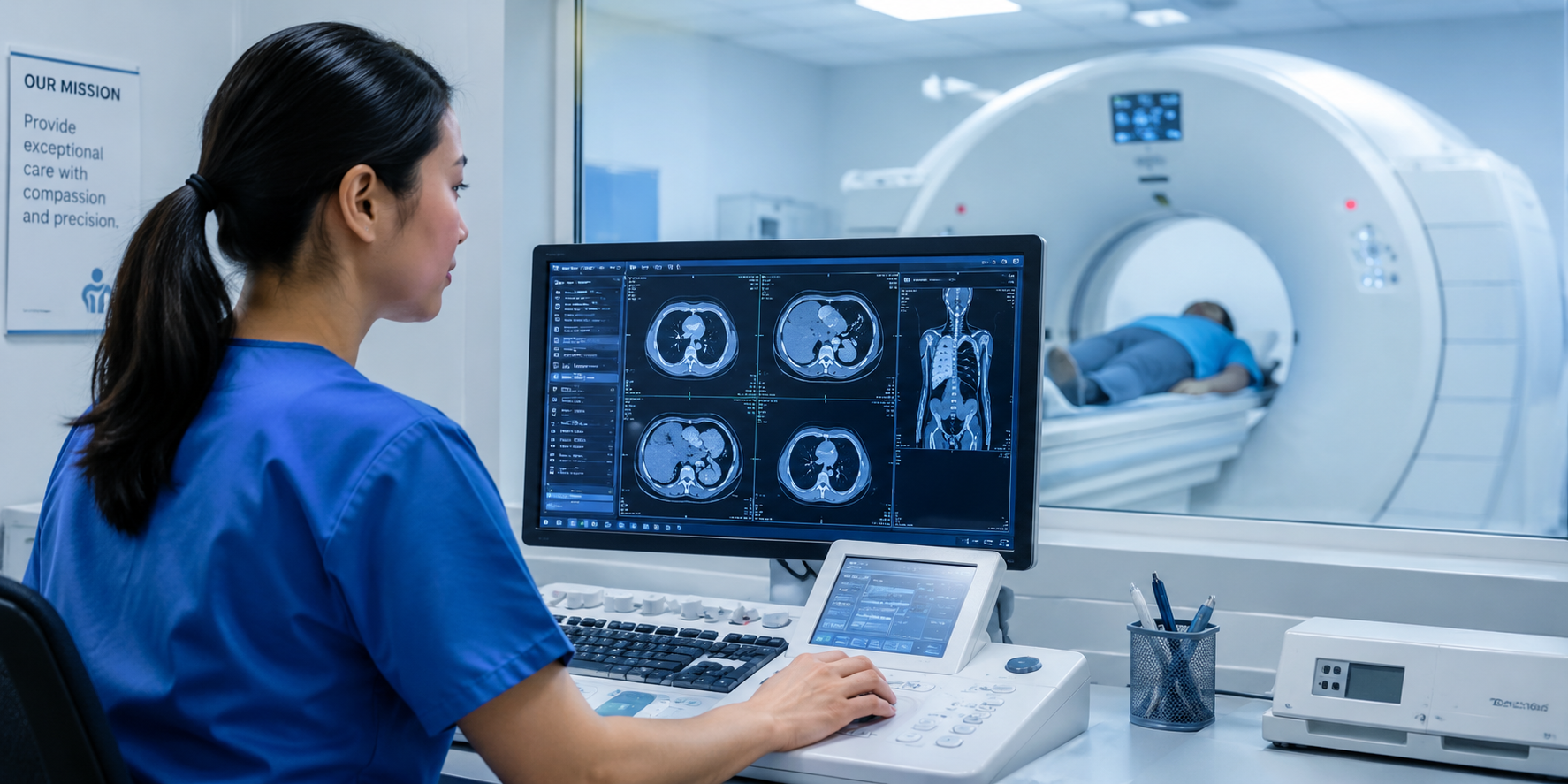
The education requirement for most of these is an accredited associate degree, typically two years, plus the relevant certification. That is a fundamentally different investment from the seven or more years and substantial debt that medicine requires, or the four-year bachelor’s degree that is increasingly the expected standard in nursing.
This does not make allied health automatically better than nursing or medicine. Those fields have their own scope, their own advancement paths, and their own reasons for their longer training. But for someone weighing healthcare careers primarily on the basis of what they will earn relative to what they must invest in education, allied health deserves genuine consideration rather than the afterthought treatment it usually receives.
Where the demand is coming from, and why it is durable
The growth across allied health is not a temporary staffing blip. It rests on structural factors that will persist for at least the next decade.
Healthcare overall is projected to grow at an annual rate of roughly 8.4 percent between 2024 and 2034, with approximately 1.9 million annual job openings across all healthcare occupations. The underlying driver is demographic. Populations across the United States, United Kingdom, Canada, and Australia are ageing, and older populations require substantially more diagnostic imaging, more rehabilitation, more respiratory care, and more laboratory testing than younger ones. This demand does not fluctuate with economic cycles the way many industries do, because the need for care exists regardless of the broader economy.
Two additional shifts are reinforcing this. Care delivery has moved increasingly toward outpatient settings, which has expanded the number of imaging centres, rehabilitation clinics, and diagnostic facilities operating outside hospitals, each of which needs allied health staff. And healthcare has moved toward earlier, more preventive intervention, which particularly benefits physical therapy – it is now frequently among the first treatments a physician recommends rather than a secondary step after other approaches have failed.
An earlier article on this site examined why healthcare careers have proven unusually resistant to AI disruption. Allied health sits squarely within that resilience for the same underlying reason. These roles require physical presence, hands-on procedural skill, and real-time judgment with patients present. A sonographer positioning a probe to capture a diagnostic image, a respiratory therapist managing a ventilator, a physical therapist assessing how a patient moves – these are not tasks current AI systems replicate. AI is changing how images are analysed and how documentation is handled, but the hands-on clinical work remains firmly human.
The specific paths, with honest assessment
Diagnostic imaging – the largest and most varied cluster
Imaging is the biggest allied health cluster and the one with the most internal variety, which makes it worth understanding in some detail.
The entry point for most people is radiologic technology, which involves performing X-rays and, with additional training, computed tomography scans. The education requirement is an accredited associate degree plus certification. Median pay for the radiologic and MRI technologist group sits around $88,180, with projected growth of about 5 percent, faster than the average across all occupations. Demand is driven by rising diagnostic imaging volumes, particularly in emergency departments and trauma centres where CT scanning is central to rapid diagnosis.
What makes imaging particularly interesting as a career is the specialisation ladder built into it. A radiologic technologist can cross-train into computed tomography, magnetic resonance imaging, mammography, or interventional radiology, and each specialisation carries higher pay. This means the initial two-year qualification is not a ceiling but a foundation, and the progression happens through additional credentials rather than through returning for another full degree.
Diagnostic medical sonography is worth separate attention because of its combination of pay and growth. Sonographers use ultrasound to image organs, tissues, and blood flow, supporting diagnosis across abdominal, obstetric, vascular, and cardiac specialties. The median of $96,590 combined with 13 percent projected growth makes it one of the strongest positions in the entire allied health category. The work is radiation-free and highly patient-facing, which some people find preferable to other imaging modalities.
Nuclear medicine technology and radiation therapy sit at the top of the pay scale, at $101,370 and $105,310 respectively. Radiation therapy involves delivering radiation treatment to cancer patients, which means working closely with people through a genuinely difficult period of their lives. This is meaningful work that suits some temperaments deeply and is emotionally demanding in ways worth considering honestly before entering it.
Respiratory therapy – strong growth and genuine clinical responsibility
Respiratory therapists evaluate and treat patients with breathing and cardiopulmonary conditions, working across intensive care units, emergency departments, pulmonary clinics, long-term acute care facilities, and neonatal settings. The scope runs from managing asthma and chronic obstructive pulmonary disease to operating ventilators for critically ill patients.
The projected growth of 12 percent between 2024 and 2034 is among the strongest in allied health, with roughly 8,600 openings anticipated each year. The pandemic period raised the visibility and institutional priority of respiratory care substantially, and that elevated recognition has largely persisted in how healthcare systems staff and invest in these teams.
The education path is an associate degree plus credentialing. What deserves honest mention is the nature of the work. Respiratory therapists in intensive care carry genuine clinical responsibility in high-pressure situations, and the patient population includes people who are critically ill and premature infants. This is demanding work emotionally as well as technically. It is also, for people suited to it, work with an unusually clear sense of consequence – the interventions matter immediately and visibly.
Physical and occupational therapy – higher education investment, higher ceiling
Physical therapy sits differently from the fields above because the education requirement is substantially greater. Practising as a physical therapist in the United States requires a doctoral qualification, which is a multi-year commitment beyond an undergraduate degree. The median annual salary is above $100,000, with projected growth of around 15 percent.
This makes physical therapy a genuinely different proposition from the imaging and respiratory paths. The earnings are strong, the growth is strong, and the professional autonomy is considerable. But the education investment approaches that of some medical specialties, which changes the return calculation significantly. Anyone considering physical therapy should evaluate it against that longer, costlier path rather than assuming it sits alongside the two-year allied health routes.
The assistant pathways are worth knowing about for this reason. Physical therapist assistants and occupational therapy assistants work under the supervision of licensed therapists, require an accredited associate degree rather than a doctorate, and offer entry into the rehabilitation field with a fraction of the education investment. The pay is lower than for fully licensed therapists, but the path is dramatically shorter, and for some people it is the more sensible fit.
Medical laboratory science – essential work, more modest pay
Medical laboratory scientists and technologists perform the diagnostic testing on blood, tissue, and other specimens that underpins a large share of medical decision-making. The work is genuinely essential, and the field faces persistent staffing shortages.
The honest note here concerns pay. Laboratory roles generally sit lower in the allied health pay range than imaging or respiratory positions, with medical technologists averaging around $57,380 in some analyses. Projected growth is around 5 percent. This is stable, meaningful work with reasonable security, but it does not carry the earnings potential of the imaging specialisations, and anyone weighing allied health primarily on financial return should know this clearly rather than discovering it after committing.
The trade-offs that career content usually skips
Allied health has genuine advantages, and this article has covered them. Being honest requires covering the disadvantages with equal directness.
The physical demands are real. Most allied health roles involve being on your feet for full shifts, positioning and moving patients, and operating equipment that requires physical effort. Imaging technologists in particular spend considerable time helping patients into position. Over a long career this takes a physical toll, and it is worth considering whether the work suits your body as well as your interests.
Shift work is common. Hospitals operate continuously, which means night shifts, weekends, and holidays are part of the reality for many allied health roles, particularly in imaging, respiratory care, and surgical services. Some people find this manageable or even prefer it for the pay differentials night work often carries. Others find it corrosive to their health and relationships over time. This deserves honest self-assessment before entry rather than after.
The advancement ceiling is a genuine consideration. Allied health careers have real progression through specialisation, senior technologist roles, and department leadership, but the ceiling is lower than in medicine or in some nursing pathways. A radiologic technologist who cross-trains extensively and moves into department management has a good career, but the earnings and authority trajectory is more bounded than a physician’s or an advanced practice nurse’s. For people who want an open-ended ceiling, this matters. For people who want a well-compensated, stable, skilled profession without a decade of training, it is a reasonable trade.
Accreditation matters more than people initially realise. Eligibility to sit for certification examinations depends on graduating from a programme accredited by the relevant body for that field, and the accrediting bodies differ by profession. A programme that is not properly accredited can leave a graduate unable to certify and therefore unable to practise. Verifying accreditation with the certifying body directly, before enrolling and paying, is not excessive caution. It is a basic and necessary step, and it is the single most consequential mistake a prospective allied health student can make.
How to actually choose within allied health
The decision framework this site has applied to nursing and medical certifications works here too, adapted to the specific question of choosing an allied health field.
Start with the education investment you can genuinely make, because this narrows the field substantially and honestly. If a two-year commitment is what you can manage financially and practically, imaging, respiratory therapy, and the assistant pathways in rehabilitation are open to you, and several of them pay very well. If you can commit to a doctoral pathway, physical therapy opens up with its higher ceiling and greater autonomy. Being realistic about this constraint first prevents wasted planning.
Then consider the work itself, seriously rather than superficially. Imaging is technical and equipment-focused with moderate patient interaction. Sonography is highly patient-facing and requires steady hands and spatial reasoning. Respiratory therapy involves acute, high-pressure clinical work with critically ill patients. Radiation therapy means sustained contact with cancer patients through difficult treatment courses. Laboratory science is largely analytical with limited patient contact. These are genuinely different daily experiences, and matching them to your temperament matters more over a thirty-year career than a modest difference in starting salary.
Verify the specific requirements in your target country before committing. This article uses United States federal wage data, and the education and licensing structures differ meaningfully in the United Kingdom, Canada, and Australia. An earlier article on this site covered the international registration landscape for nurses, and allied health professions have their own equivalent complexity. If you intend to practise internationally, or if you trained in one country and want to work in another, verifying requirements with the relevant regulator in your target country is essential before investing in any programme.
How to Identify and Bridge Your Skill Gap After Graduation – A Practical 2026 Guide
How to Get Certified in Health Informatics – A Step-by-Step Guide for 2026
Compliance as a Career Path for Law Graduates – An Honest Look at 2026
Cybersecurity Certifications for BTech Graduates – An Honest 2026 Guide
The Skills That Will Keep Your Degree Relevant Through 2026 and Beyond
Finally, verify accreditation with the certifying body directly. It is worth repeating because it is the mistake that most damages people who make it. Confirm that the specific programme you are considering is accredited by the body whose certification you will need, and confirm it from the certifying body’s own information rather than from the programme’s marketing.
Allied health does not receive the attention that medicine and nursing do, which is precisely why it represents genuine opportunity. These are skilled clinical professions with strong demand, durable growth, meaningful work, and in several cases an unusually favourable relationship between what the education costs and what the career pays. For someone considering healthcare who assumed the only real options were doctor or nurse, it is worth a serious look.
If you have a specific question about an allied health path or how it compares to other healthcare careers, write to me at editor@degreeplusdaily.com. I read every email.